
As we head to 2020, we know there are still numerous applications using old traditional lighting such as incandescent, HID or halogen that are just waiting to be retrofitted to LED. These are no-brainers but there is an increasing amount of situations where new LED is being used to replace old generation LED. Generally this means rebates aren’t applicable and energy savings are marginal, despite an increase in LED efficiency over the years. But light quality and having the right kind of lighting has proved vital as many of the early LED solutions left some to be desired.
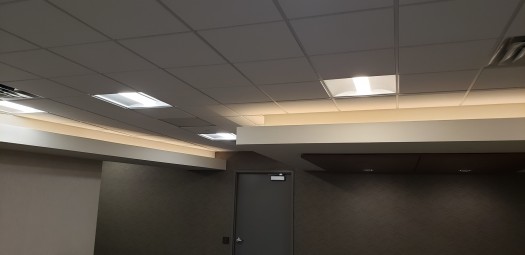
The above picture is an example of LED gone wrong. An office with warm 3000K cove lighting had lay-in troffers. A contractor came in for the customer and installed bright 4000K LED lay-in troffers. As one could expect, these new bright 4000K troffers did not go well with the 3000K cove lighting, creating a lighting system with mismatched colors!
Premier was called in to assess the situation and picked out a low-lumen LED lay-in fixture with 3000K color temperature to match the color of the cove lighting. It turned out to be an expensive mistake for the customer but ultimately they got the right solution that they needed. But it touches on the importance of doing a full analysis initially to determine the correct LED lighting for a given application the first time.
LED manufacturers have gone to great lengths within the last year to limit these types of issues by putting out LED fixtures that allow the end user to change color temperature or even lumen levels on the fixture itself. This allows a user to test and find out what is right for them on the field, as opposed to guessing and dealing with expensive returns.
One of the first examples of this was the GE LRX LED downlight which had an option for 650 lumens or 1000 lumens (adjustable on the fixture). This technology has expanded to the point where there are now single LED fixtures that can choose between 2700K, 3000K, 3500K, 4000K and 5000K color temps in addition to several lumen packages like this ETI 6″ LED Can.
Not only do fixtures like those provide versatility to the user but they limit or eliminate altogether the risk of ending up with the wrong lights for a given environment. Expect to see demand for controls this like grow exponentially in the years ahead as demand for the end user to control their lights grows.