To understand lighting, it’s important to be well-versed in lighting-related jargon! We have added to our lighting glossary over the 15+ years we have had a presence online as a lighting authority. Hopefully you learn a thing or two and if you have any other lighting terminology that we missed, let us know!
When discussing lighting, the terms “color temperature” and “CRI” pop up frequently and are often a point of confusion for the unfamiliar. Both can affect how the color of an object appears to the eye, so it’s helpful to understand these factors before choosing a lamp.
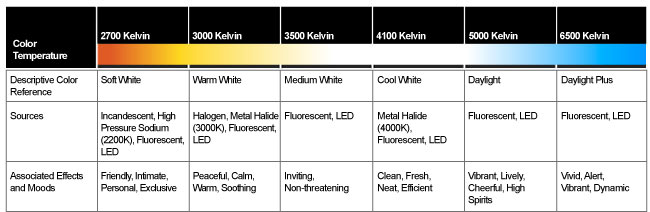
- Color Temperature – Color Temperature describes the color characteristics of a light and gives an indication of how “warm” or “cool” it appears; the higher the color temperature value, the cooler the light color. It’s important to note that Color Temperature does not describe how natural or unnatural the colors of an object will appear under a particular light source. In fact, two lamps with the same Color Temperature can render colors differently.
- Color Rendering Index (CRI) – CRI gives a numerical indication of a light’s ability to render the colors of an object accurately (i.e. as seen in natural light). CRI numbers aren’t subjective but scientifically determined by comparing a lamp to a standard. Color rendering is measured on a scale from zero to 100, with CRI 100 representing natural outdoor light.
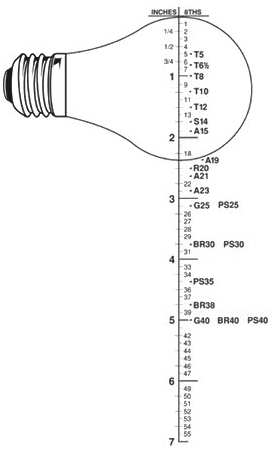
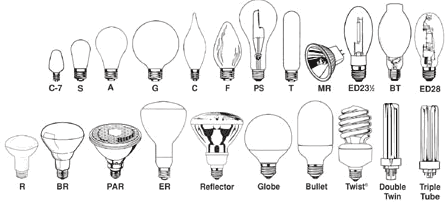
Use our full-size lamp measuring scale to determine the size of your bulbs and to ensure accurate ordering. You can find your lamp’s size by placing it at the top of the scale and measuring its maximum diameter. To make it easier, the most popular lamp types are listed next to their appropriate size.
Lamp size is determined by the maximum diameter as expressed in eighths of an inch(1/8”). For example: an A19 lamp is 19-eighths of an inch of 2 1/8” in diameter. To determine a lamp size, use the full size scale shown above (calibrated in eighths). Place one edge of the lamp to be identified on the top edge of the scale and measure the approximate diameter by reading the scale at the opposite edge of the lamp. Size of the more popular lamp types are indicated on the scale.
At times it can seem as if every type of light manufacturer is claiming to have the most cost-effective products. With so much contradictory information, how can you figure out the true cost of lighting? Quite simply, you must analyze three issues:
- Initial costs – This includes equipment, installation, and other services.
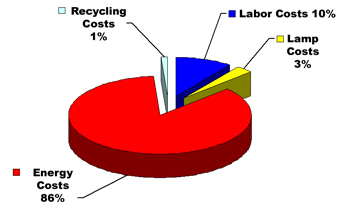
- Energy costs -How much will it cost to operate your lighting system? This is your overall biggest expense.
- Maintenance costs – This includes lamp replacement, ballast replacement, fixture cleaning, and louver and lens replacement. Will maintenance needs increase as the system ages?
Add all three variables together to get your total lighting cost. To accurately determine long-term costs and ROI, make sure to measure estimated maintenance and energy costs over the life of the system.
View our chart of basic lamp types to find the product best suited for your application.
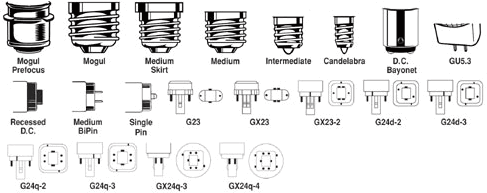
Consult our chart of lamp base types to easily locate the proper base for your fixture.