
As the 2026 state ban on fluorescent lighting approaches, many facility managers are wisely converting their T8 fluorescent tubes to LED. It’s a smart move—LEDs are more energy-efficient, longer-lasting, and safer for both people and the environment.
But as we’ve seen time and again in buildings, the moment you pop open that fixture to swap in a new LED tube, you discover something else hiding inside: an old fluorescent emergency battery pack.
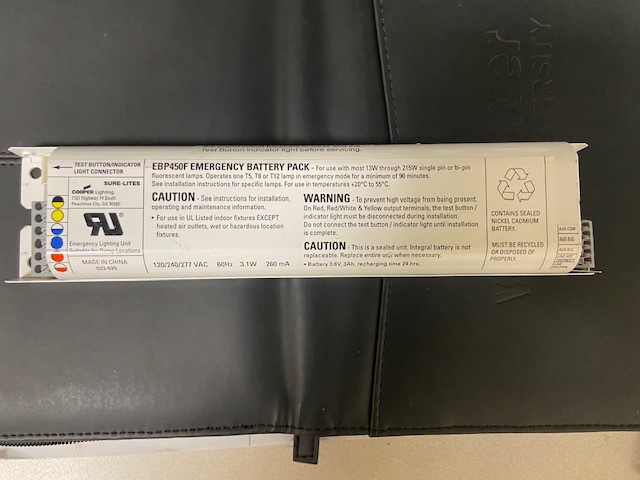
Like the one pictured here: the Sure-Lites EBP450F, designed to power a fluorescent lamp in emergency mode during a power outage.
Here’s the problem: your new LED tubes won’t work with this battery pack.
Why Doesn’t It Work?
This emergency ballast is built specifically for 13W–215W fluorescent lamps. It can’t detect or operate most LED tubes, especially ballast-bypass or line-voltage types. That means if you leave it in place and think you’re covered in a power outage—you’re not.
Worse, the battery could still be energized, leading to unsafe conditions or unnecessary energy draw.
So, what are your options?
✅ Your 3 Best Options from Premier Lighting
At Premier Lighting, we help our clients stay compliant, energy-efficient, and safe—especially when converting legacy lighting systems. Here are your top three solutions when encountering a non-compatible emergency battery pack during an LED conversion:
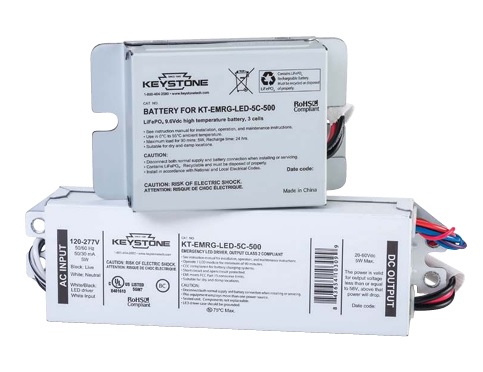
Option 1: Replace with a Constant Power LED Emergency Driver
🔗 Keystone KT-EMRG-LED-5C-500-IP
This is the most direct replacement solution. Remove the existing battery pack and install a constant power emergency LED driver. It’s designed to work with compatible LED fixtures or tubes and provides:
- 90 minutes of emergency operation
- 5W constant power output
- UL 924 listed for code compliance
- Compatible with a wide range of LED loads
Best for: Fixtures that must maintain integrated emergency lighting function and where aesthetic consistency is important.
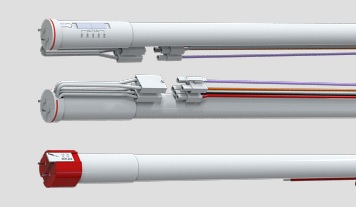
Option 2: Use an Emergency-Backup LED T8 Tube
🔗 Keystone KT-LED145T8EM-48GC-8CSJ-D
This all-in-one solution simplifies things. You remove the old battery pack, install a standard ballast-bypass LED T8, and replace one of your regular tubes with this emergency backup T8. It charges during normal operation and automatically powers on in an outage.
- Color-selectable (3000K to 6500K)
- Battery built directly into the tube
- Eliminates extra wiring and separate emergency drivers
- Great for maintaining clean fixture design
Best for: Facilities looking to keep installation simple while maintaining emergency compliance in line-voltage retrofits.
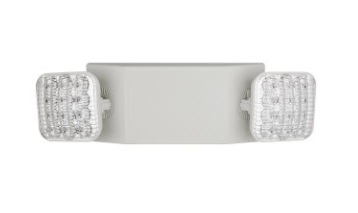
Option 3: Install an Emergency Bug-Eye Fixture
🔗 TCP Emergency Dual-Head LED Light
If retrofitting every fixture with emergency capability isn’t practical, the best path may be to remove the old emergency ballast and instead install a wall-mounted “bug-eye” emergency light nearby.
- Dual-head LED design for maximum coverage
- 90-minute backup time
- Wall or ceiling mount
- Affordable and reliable
Best for: Creating a compliant egress path in areas where fixture-integrated emergency lighting isn’t required.
Partner with Premier Lighting for Safe, Compliant Retrofits
No matter which solution you choose, Premier Lighting is here to guide you through your LED conversion—from product selection to layout design and code compliance. We stock all the retrofit gear you need, and our lighting specialists are available to evaluate your current systems and provide tailored recommendations.
With the 2026 fluorescent ban on the horizon, now’s the time to plan your upgrades—and ensure your emergency lighting is part of the conversation.
Contact us today to get started with a free audit or to place an order with a dedicated sales representative.
when in 2026 does ban start on what types of fluorescent bulbs and when will stores stop carrying them?
Currently converting fixtures as the ballasts blow to LED. See no need to waste perfectly good bulbs and ballasts.