
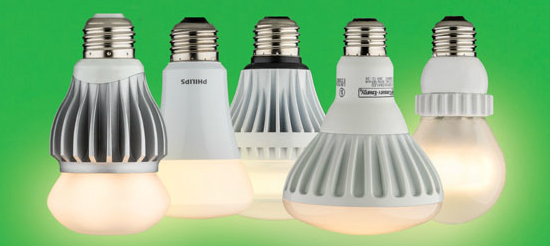
When installing LED lights and fixtures in your business or home, you may find yourself wondering if the parts are replaceable. In other words, can you simply swap out a bulb or other piece (like you’re used to doing with incandescents) and have the luminaire still function properly? In short, the answer is yes and no. Some LED lamps are interchangeable while others are not. However, a group known as Zhaga is working hard to create standardization across the entire LED lighting industry, and there are already many “Zhaga-Certified” products on the market today.
The Problem with LEDs Not Being Interchangeable
Initially LED luminaries were built with the LEDs permanently attached to the fixture. This was good for thermal management and product life, but it made it nearly impossible to replace parts or to upgrade the lights. Although LEDs do have extremely long lives, they occasionally get damaged and, with the rapid growth in technology, many folks want the option to upgrade their bulbs. Naturally, there is a need to have replaceable parts.
Still, if every manufacturer had their own mishmash of replacement parts that were incompatible with other brands then things would get even more confusing for both suppliers and consumers. To avoid this, the Zhaga Consortium stepped in to create a set of standards for LED products. Currently, there are hundreds of companies across the globe participating in Zhaga’s initiative.
Benefits of Standardization
LEDs are incredibly efficient and have superb light quality, yet their former lack of replacement parts and interchangeability has slowed down their adoption. The good news is Zhaga’s standardizations are now making that a non-issue. This means the LED market should begin to grow even more rapidly, as folks have confidence they can replace their lamps in the future. Other benefits of standardization are:
Enjoy Technology Improvements – With interchangeable parts, buyers can upgrade their LEDs for better performance.
Future Proof – There’s less risk any particular product will become obsolete in the near future.
Multiple Sources – Consumers and suppliers aren’t limited to components from a single manufacturer and can switch providers at any time.
Lower Replacement Costs – With modifications or re-engineering unnecessary, parts can be replaced with less time and expense.
More Competition – With a broader supply base, manufacturers will have greater competition, which will result in lower prices for consumers.
Technology Growth – LED creators can focus on innovation instead of worrying about interface between modules and luminaires.
It’s Easier! – It’s simpler for everyone to find the products they need and make necessary changes when things are standardized.
Where is Standardization at Today?
As of now, Zhaga is still “developing standardization that enables the interchangeability of LED light sources made by multiple different manufacturers.” They have their specifications organized in “books,” which describe various types of LED light engines and how they should interface with LED luminaires.
Zhaga has made major progress in several LED applications, including down lighting, street lighting, ambient lighting, and spot lighting, and has certified over 160 products. These are available on the commercial market and are easy to find, since they bare the Zhaga-certified logo — if you don’t see the Zhaga logo, you can’t be sure the light is interchangeable.
Although LEDs still don’t have across-the-board standardization, things have vastly improved and it’s now easier than ever to find interchangeable LED lighting.